
// insight · 10 Mar 2025
Your product operating model will stall on fear, not process
Most product operating model transitions stall on stakeholder fear, not process. Five moves executives can make in the first 90 days.
By Amy Johnson · Chief Product Officer

Most product operating model transitions do not fail on method. The roles, ceremonies and roadmaps are the easy part. They fail because someone with real influence is quietly afraid, and nobody asked them what of.
If you sponsor the change, this is your job, not the delivery team's. Moving from projects to long-term ownership of customer and business value asks people to give up control, certainty and familiar measures of success. Unless you surface those concerns early, you will not embed the change.
What poor stakeholder engagement costs you
Strategy that stays on the slide
Without consistent engagement, teams work in silos and follow local agendas. The strategy is understood at a high level but never translates into day-to-day choices, so effort scatters and priorities compete.
Resistance dressed as process
Business stakeholders used to project delivery keep asking for features and dates. Product teams need both the permission and the habit to ask "what problem are you trying to solve?" and to bring every conversation back to outcomes.
Slow decisions
Heavy governance, rigid funding cycles and decisions made far from the work produce misaligned priorities and wasted effort. Teams without authority to decide wait for top-down prioritisation, and time to value suffers.
Five moves for the first 90 days
1. Find out what each stakeholder is afraid of
The usual fears are failure, loss of control, wasted spend and reputational risk. People rarely say so. They push back on an idea, add an approval step or slow a decision, and those behaviours are data. Listen for them, ask better questions, then answer the fear directly: offer a low-risk way to test, bring evidence that reduces uncertainty, or frame the proposal in their priorities.
2. Map stakeholders before you engage them
A one-page map is enough. List who is influenced by or influences the change, rate each on influence and interest, and write down the likely fear of every high-influence person. Then decide who owns each relationship and what they will be told, when. Deal with the high-influence concerns first.
3. Take the strategy below the leadership team
Without a compelling vision, stakeholders default to their existing experience. State the product vision and strategy plainly, and take it to every level of the organisation. Tie business goals to product outcomes, move from feature roadmaps to outcome roadmaps, and use a concrete example of what success looks like.
4. Put stakeholders inside discovery
Do not treat stakeholders as external approvers. Invite them to a workshop, a planning session or a discovery playback. You do not need to change the organisation chart to work cross-functionally. Use an Opportunity Canvas or a one-page brief so that every piece of work has a clear goal tied to strategy, and use pilots, prototypes or controlled rollouts to reduce the perceived risk.
5. Measure outcomes, and show the data
The hardest shift is from output measures, such as features delivered, to outcome measures, such as impact on business goals. Judge work by value delivered, not completion. Share the evidence regularly, whether that is fewer support tickets, higher satisfaction or revenue growth. Optimising only for predictability teaches teams to hit delivery targets instead of improving customer outcomes.
Treat IT as a partner, not an execution function
If technology is seen as the team that delivers what the business asks for, you will leave a pile of value unrealised. Bring product, technology and business leaders together to agree the priority problems and the outcome you want. That is not decision by committee, but you should leave the room with a shared understanding. Train and coach people in product thinking, and co-design solutions in discovery instead of handing over requirements.
Three decisions for this quarter
- Name one executive who owns stakeholder engagement for the transition. It cannot sit with the delivery team alone.
- Pick the three most influential stakeholders and spend 30 minutes with each in the next month asking what worries them about the change.
- Choose one metric that moves from output to outcome in your next steering meeting, and report it every month.
Planning a move to a product operating model? Propel's product strategy team works with executives on exactly this.
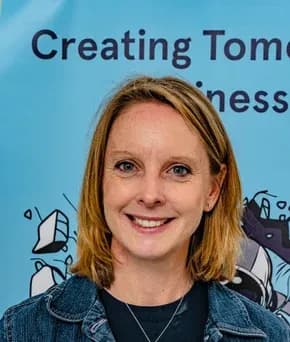
Amy Johnson | Chief Product Officer
A product leader, passionate about empowering teams and fostering inclusion. Multi industry experience, now leading the product team at Propel, where we partner with you to accelerate your product development and achieve product market fit faster.