
// insight · 19 Nov 2026
The review trap
Faster AI generation moves the bottleneck to human review. Build trust into the system, measure what survives review, and spend people time on judgement.
By Paul Greenwell · Founder
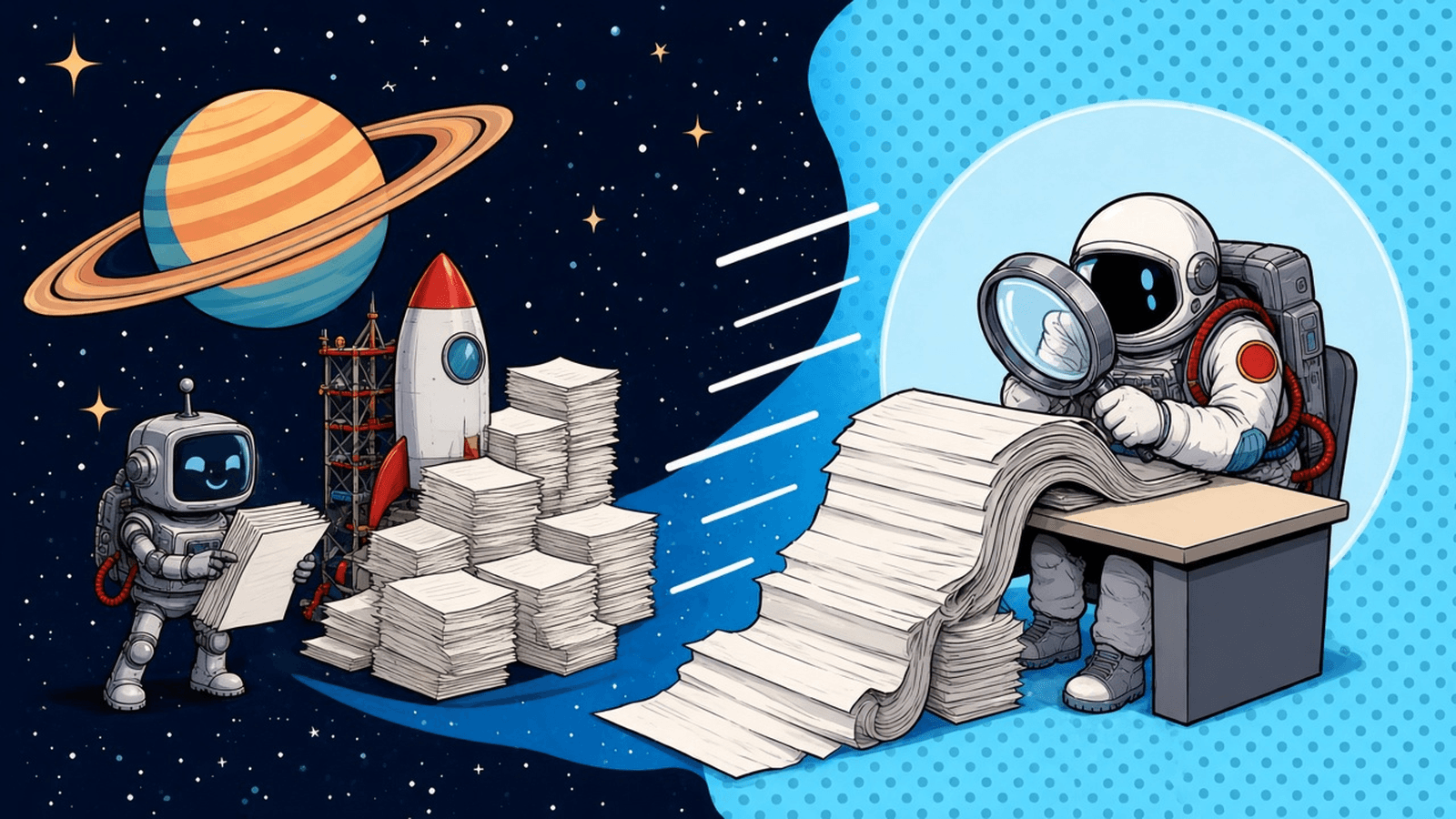
Spec-driven development got the AI building the right thing. Then developers spent the time they’d saved reviewing every line, because they didn’t trust it.
That’s the review trap. Faster generation moves the bottleneck to human review, and reading every line doesn’t scale.
The fix is to build trust into the system, and then measure it.
At one financial services client, the AI wasn’t picking up the existing coding standards in a brownfield codebase, so reviewers kept making the same comments. We turned those review comments into rules the agents follow. Review time for a comparable change dropped from two hours to 30 minutes.
On another team we track the share of AI-written work that survives review. In one retro, 78% of the AI’s implementation was kept. That number tells you when the output can be trusted, and where the rules need work.
Then add the checks a machine can run on every change: tests, security and secrets scanning, and a review agent that checks each change against the spec. People spend review time on judgement instead of line-by-line reading.
The outcome is developer time back from review, and a trust signal you can measure.
How much of your developers’ week now goes on reviewing AI output?

Paul Greenwell | Founder
A product and technology leader with 25+ years building software at the intersection of engineering depth and commercial strategy. A co-founder of Propel Ventures, he helps businesses apply AI through forward-deployed teams that work shoulder-to-shoulder with clients to ship end-to-end solutions with speed, autonomy and ownership.